IVF charts and infographics
13 charts built from the same cited data as the rest of this site, on success rates, costs and paying for treatment, and every step of the process. Save them, pin them, print them or embed them, free under CC BY 4.0.
Success rates and your odds
What the national data says about the chance of a baby, by age and by treatment.
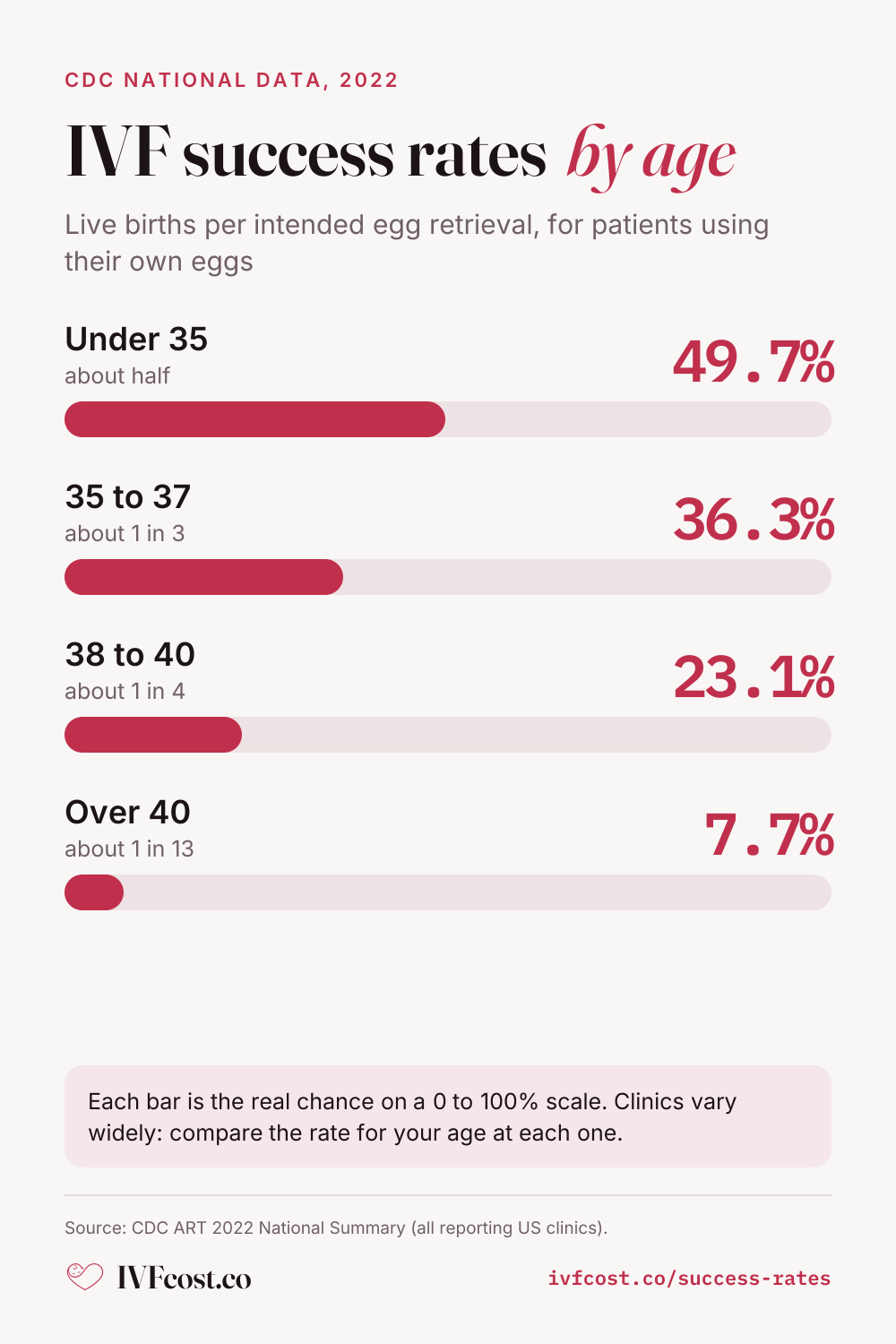
IVF success rates by age
In 2022, the share of intended egg retrievals that ended in a live birth was 49.7% under 35, 36.3% at 35 to 37, 23.1% at 38 to 40 and 7.7% over 40 (CDC ART National Summary, patients using their own eggs). That is about half under 35 and about 1 in 13 over 40. These are national averages, not a prediction for any one person.
Source: CDC ART 2022 National Summary
Success rates for every US clinic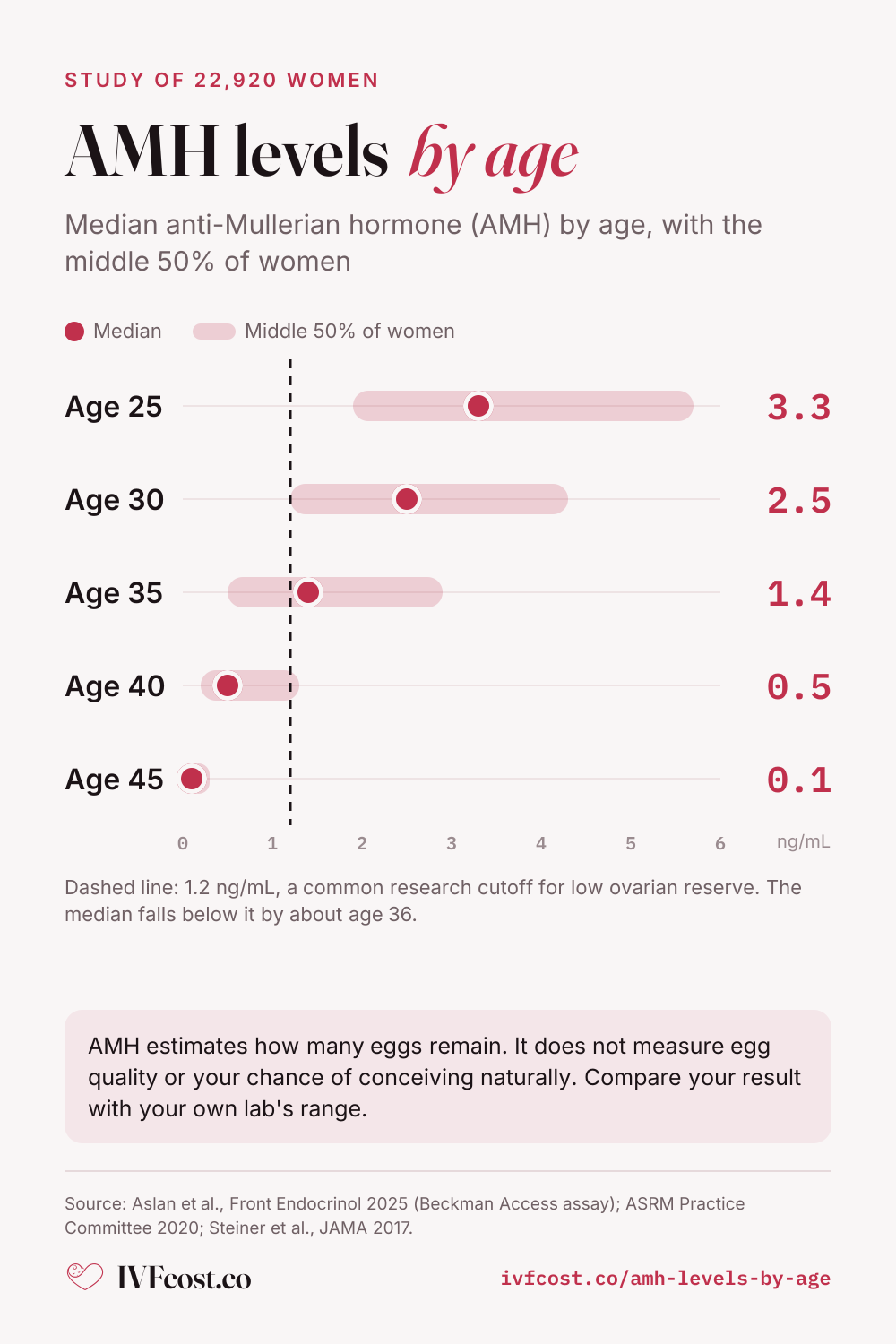
AMH levels by age
In a 2025 study of 22,920 women, median AMH was 3.3 ng/mL at 25, 2.5 at 30, 1.4 at 35, 0.5 at 40 and 0.1 at 45, with a wide normal range at every age. The median drops below 1.2 ng/mL, a common research cutoff for low ovarian reserve, by about age 36. AMH estimates how many eggs remain; it does not measure egg quality or the chance of conceiving naturally.
Sources: Aslan et al., age-stratified AMH nomogram (22,920 women), Front Endocrinol 2025; ASRM Practice Committee, Testing and interpreting measures of ovarian reserve (2020); Steiner et al., biomarkers of ovarian reserve and infertility, JAMA 2017;318(14):1367-1376
What your AMH result means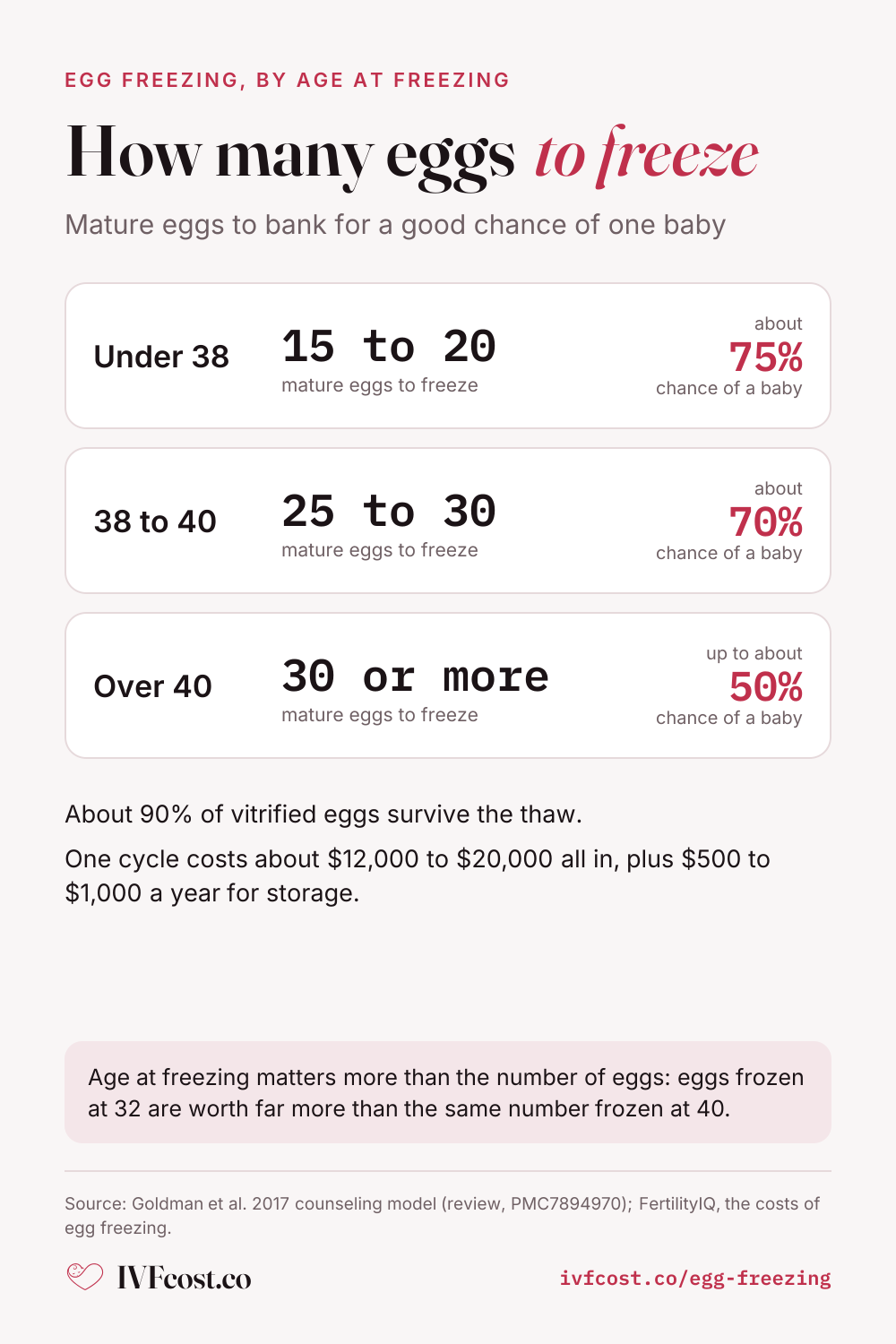
How many eggs to freeze, by age
A peer-reviewed counseling model puts the number of mature eggs to freeze for a good chance of one live birth at 15 to 20 eggs under 38 (about 75%), 25 to 30 eggs at 38 to 40 (about 70%) and 30 or more eggs over 40 (up to about 50%). About 90% of vitrified eggs survive the thaw, and one freezing cycle costs about $12,000 to $20,000 all in.
Sources: Elective oocyte cryopreservation for age-related fertility decline (review of the Goldman et al. 2017 counseling model); FertilityIQ: The Costs of Egg Freezing
Egg freezing cost and process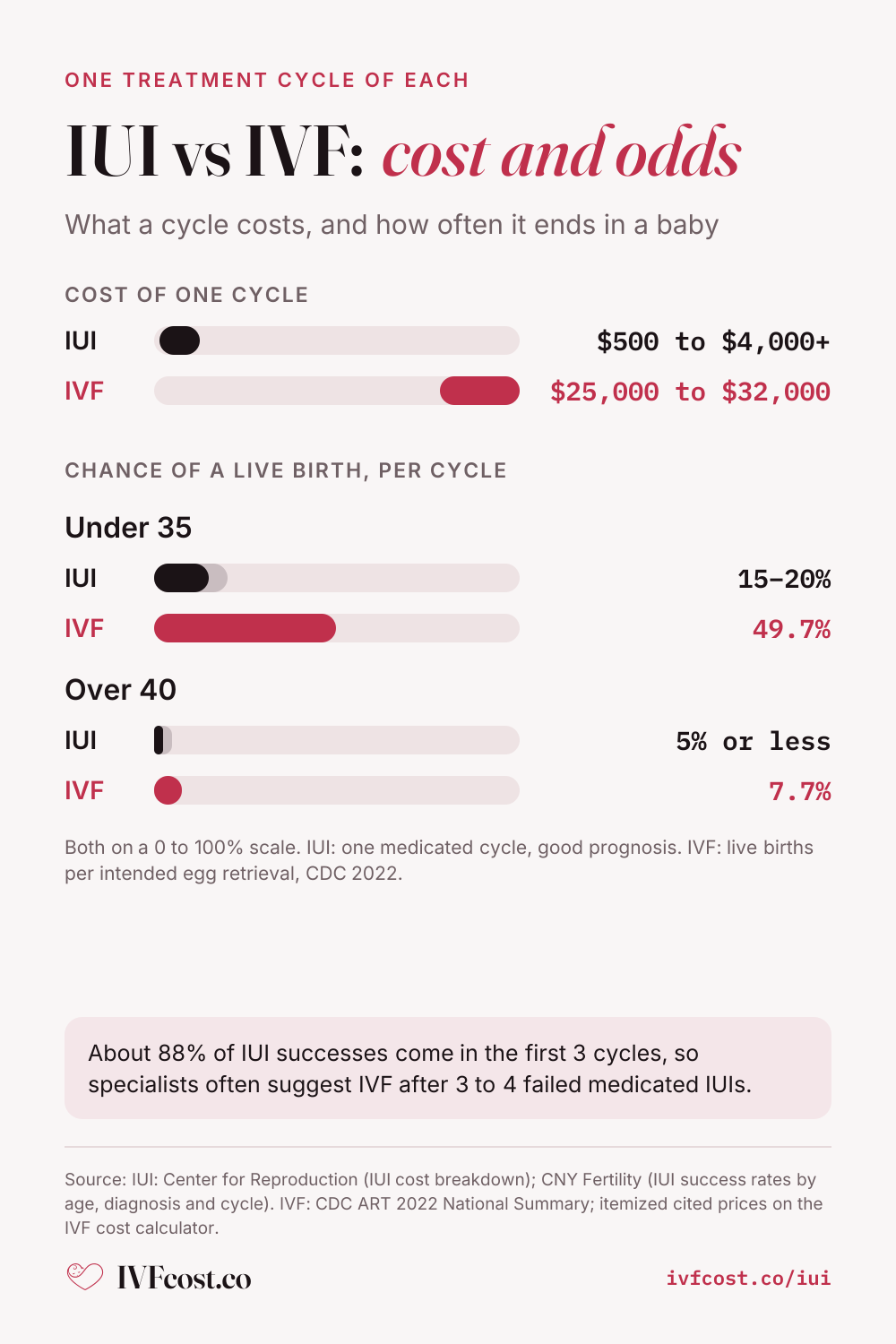
IUI vs IVF: cost and odds per cycle
One IUI cycle costs about $500 to $4,000+, depending on the medication, against about $25,000 to $32,000 for an all-in IVF cycle. A medicated IUI with a good prognosis succeeds about 15–20% under 35 and 5% or less over 40 per cycle, while 49.7% under 35 and 7.7% over 40 of intended IVF egg retrievals ended in a live birth (CDC 2022). About 88% of IUI successes come within the first 3 cycles, which is why specialists often suggest IVF after 3 to 4 failed medicated IUI cycles.
Sources: Center for Reproduction (IUI cost breakdown); CNY Fertility (IUI success rates by age, diagnosis and cycle); CDC ART 2022 National Summary; IVF cost calculator (itemized, cited prices)
IUI cost and success, compared with IVFCosts, coverage and paying for it
What treatment really costs, which extras are worth paying for, and where the money can come from.
What one IVF cycle really costs
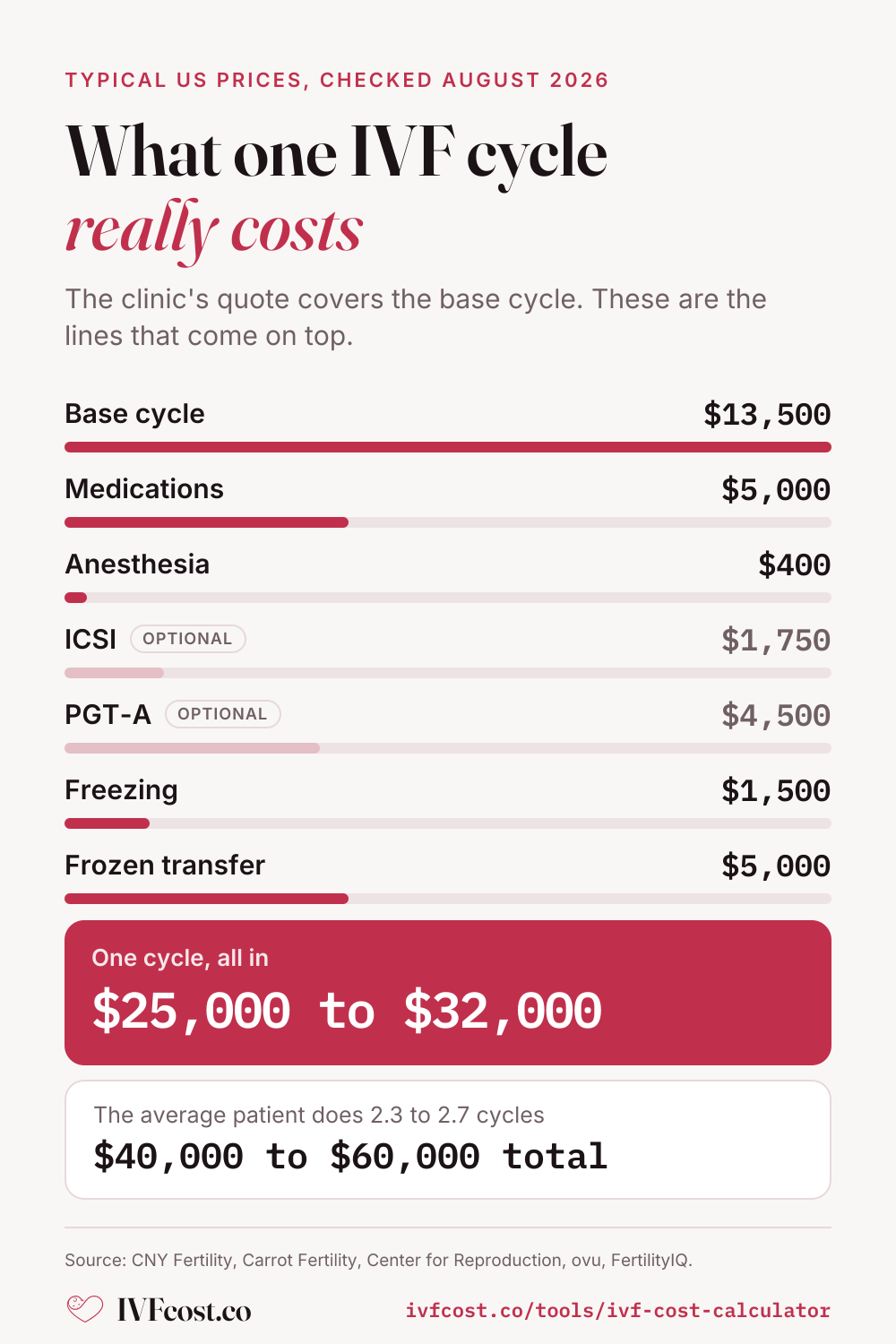
A base IVF cycle is typically quoted around $13,500, but medications, anesthesia, embryo freezing and a frozen transfer bring one cycle to about $25,000 to $32,000 all in. The average patient does 2.3 to 2.7 cycles, about $40,000 to $60,000 in total.
Sources: CNY Fertility, Carrot, Center for Reproduction (composite); Carrot Fertility; Center for Reproduction; ovu; CNY Fertility, Center for Reproduction; CNY Fertility; FertilityIQ, costs of IVF
Estimate your own IVF cost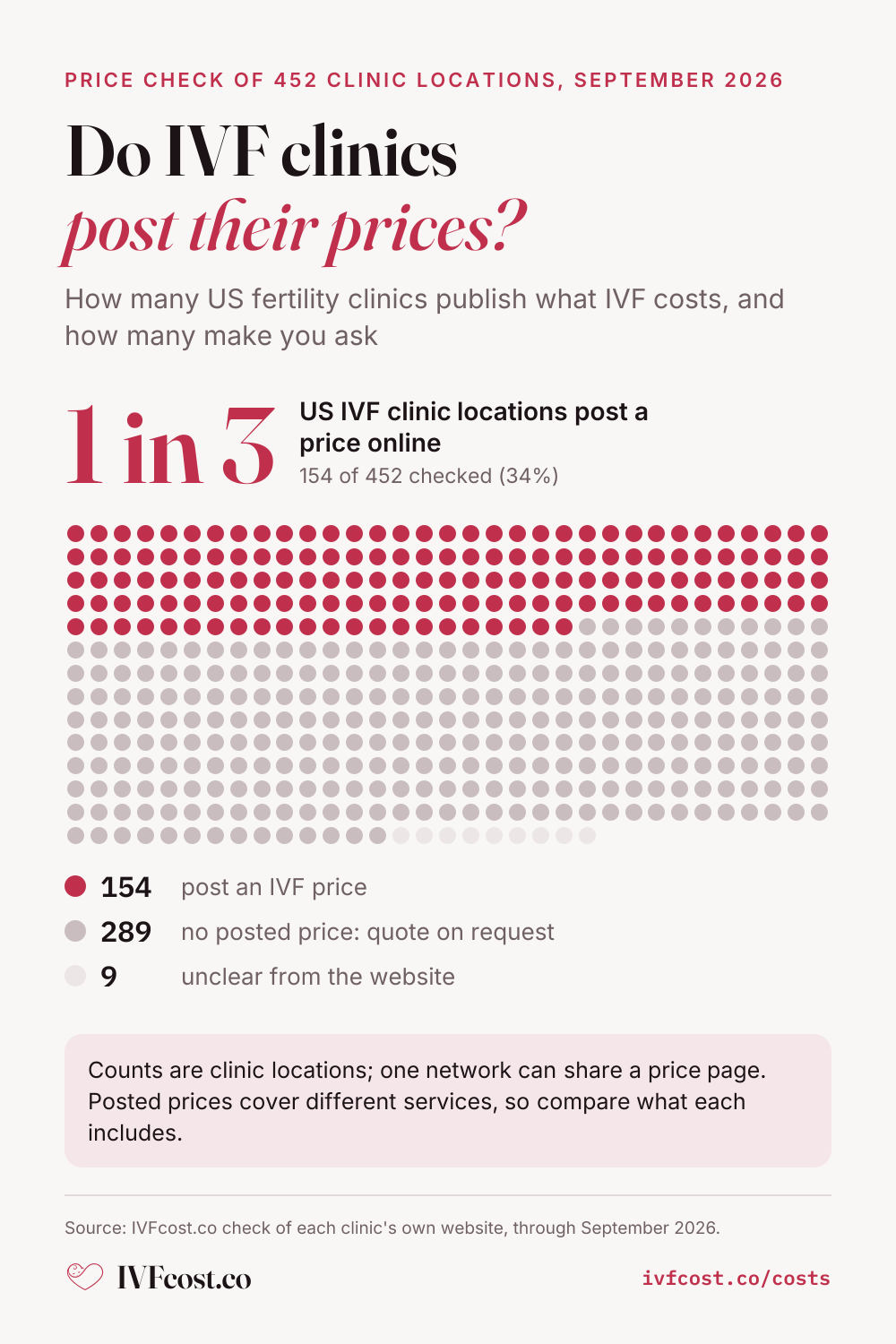
How many IVF clinics post their prices?
We looked for a published IVF price for 452 US fertility clinic locations: 154 (34%, about 1 in 3) post one, 289 do not and quote on request, and 9 were unclear. Locations in the same network can share one price page, and posted prices include different services, so compare the terms, not only the number.
Source: IVFcost.co check of US fertility clinic websites
Every published IVF price, with terms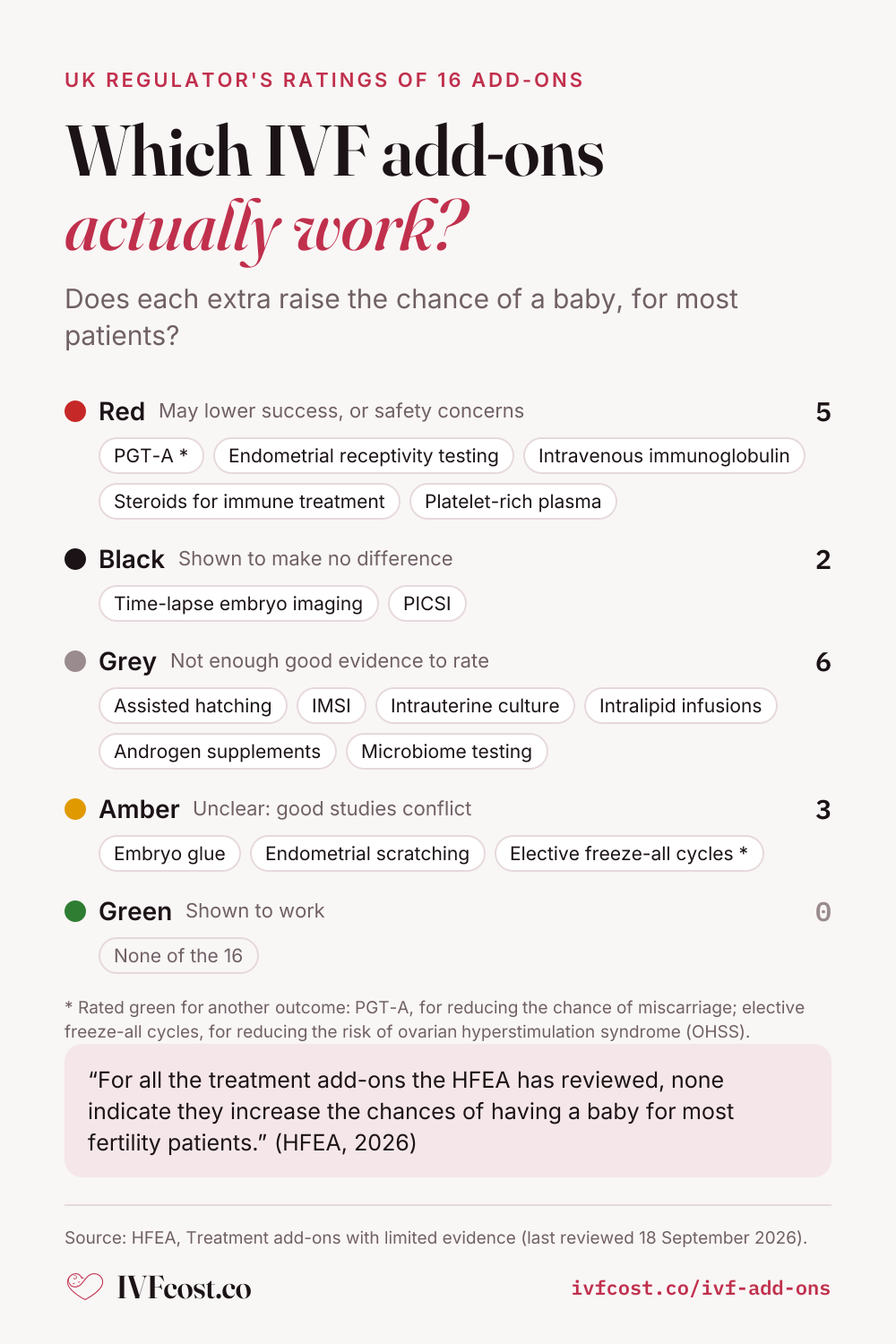
Which IVF add-ons actually work?
The UK fertility regulator, the HFEA, rates 16 add-ons, and none is rated as improving the chance of a baby for most patients: on its list, 5 red, 2 black, 6 grey and 3 amber. Its green ratings for other outcomes: PGT-A, for reducing the chance of miscarriage; elective freeze-all cycles, for reducing the risk of ovarian hyperstimulation syndrome (OHSS). In the US these extras are routine anyway: in 2022, ICSI was used in 82.0% of embryo transfers for patients under 35, while male-factor infertility was a reason in 28.0% of IVF cycles (CDC).
Sources: HFEA, Treatment add-ons with limited evidence (last reviewed 18 September 2026); HFEA statement on a new study into fertility treatment add-ons (24 June 2026)
What each add-on costs, and what the trials found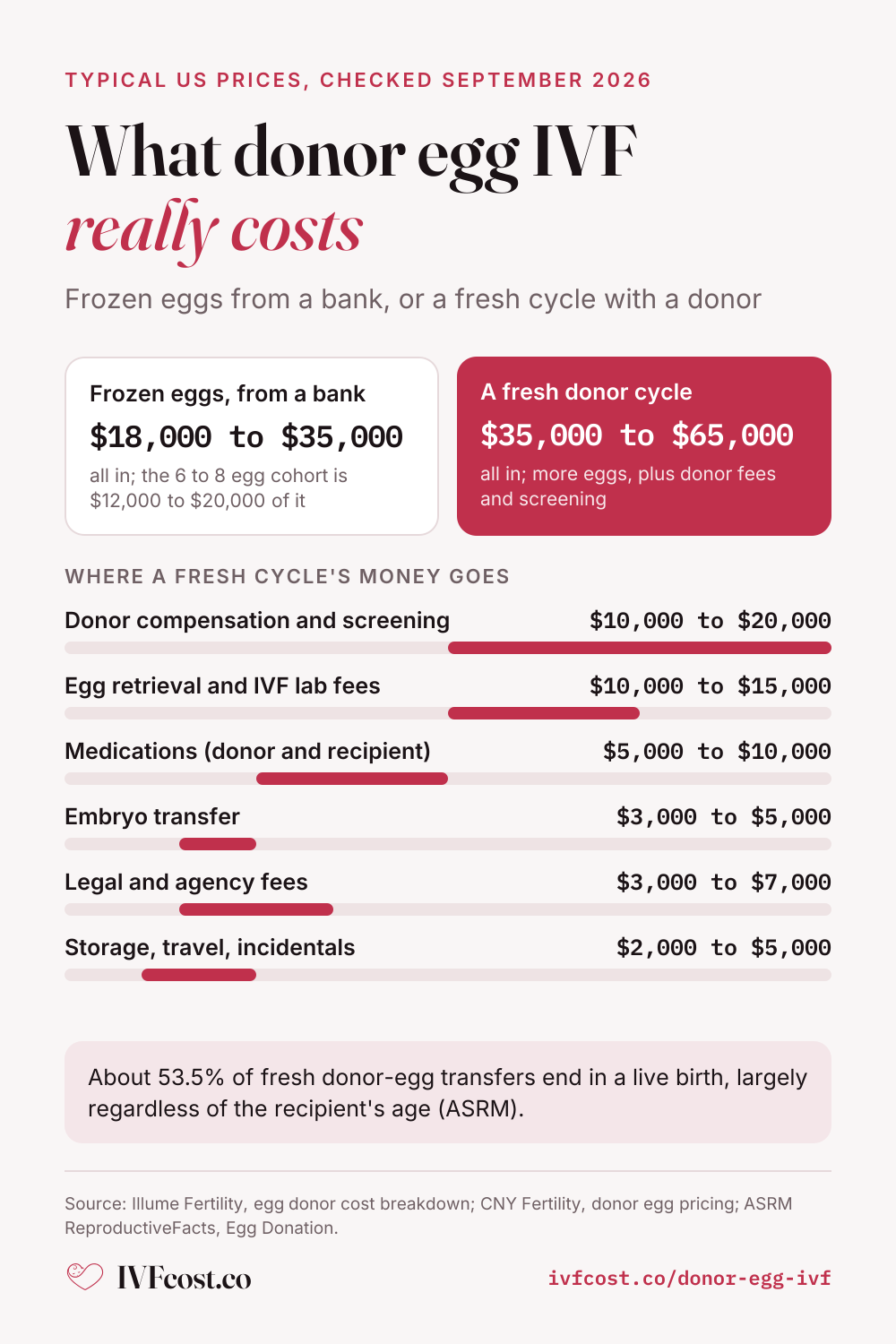
What donor egg IVF costs
Donor egg IVF with frozen eggs from a bank typically costs $18,000 to $35,000 all in, most of it for the cohort of 6 to 8 eggs ($12,000 to $20,000). A fresh cycle with a donor runs $35,000 to $65,000, led by donor compensation and screening ($10,000 to $20,000) and egg retrieval and IVF lab fees ($10,000 to $15,000). About 53.5% of fresh donor-egg transfers end in a live birth, largely regardless of the recipient's age (ASRM).
Sources: Illume Fertility: How much does working with an egg donor cost (itemized breakdown); CNY Fertility: IVF and donor-egg package pricing; ASRM ReproductiveFacts: Egg Donation (patient fact sheet)
Donor egg IVF cost, success and process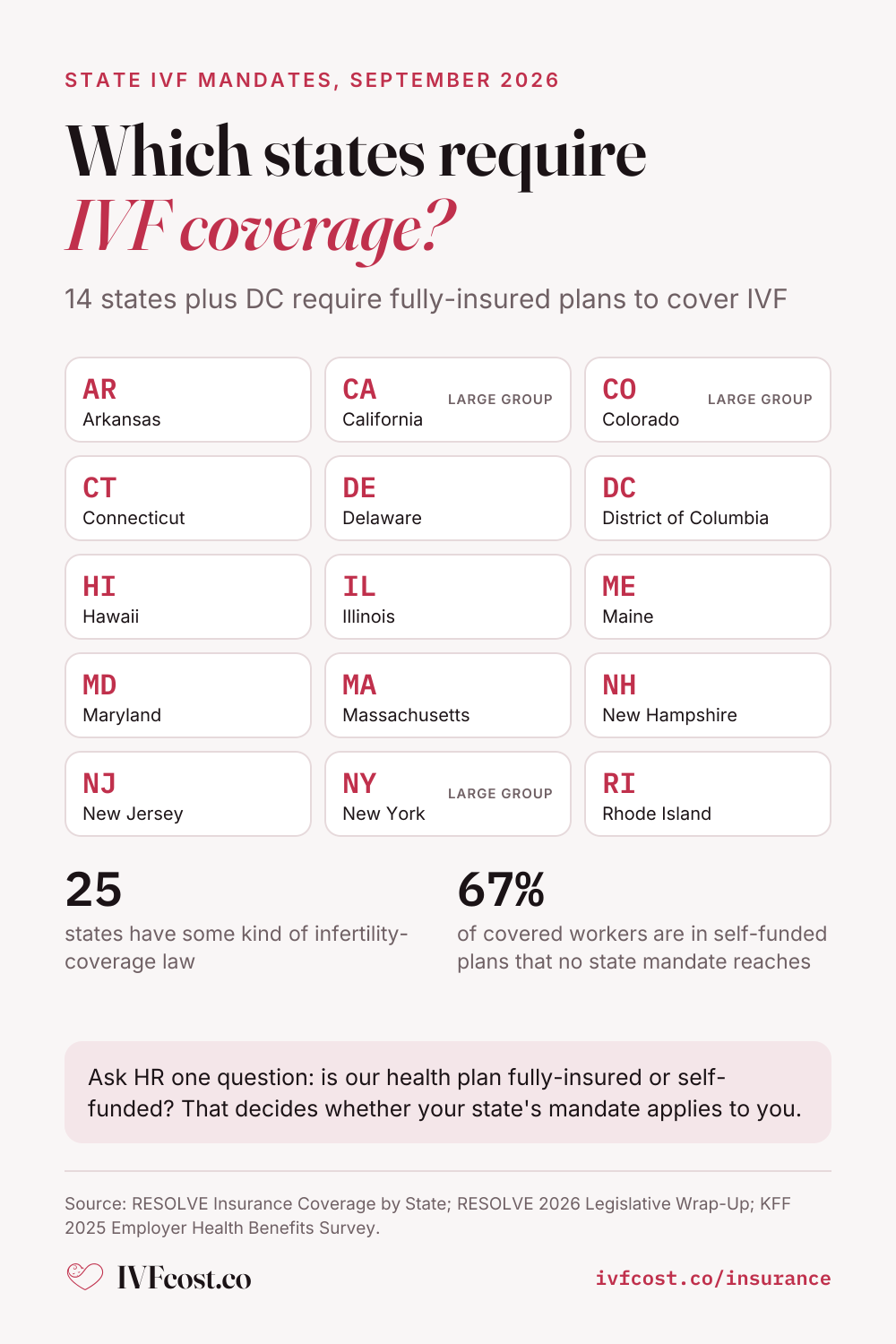
Which states require insurance to cover IVF?
14 states plus DC require fully-insured health plans to cover IVF: Arkansas, California, Colorado, Connecticut, Delaware, District of Columbia, Hawaii, Illinois, Maine, Maryland, Massachusetts, New Hampshire, New Jersey, New York and Rhode Island (in California, Colorado and New York, large-group plans only). A broader 25 states have some infertility-coverage law. A state mandate cannot reach a self-funded (ERISA) plan, and 67% of covered US workers are in one, so ask your employer whether your plan is fully-insured or self-funded.
Sources: RESOLVE Insurance Coverage by State; RESOLVE 2026 Legislative Wrap-Up; KFF 2025 Employer Health Benefits Survey
Does insurance cover IVF? How to check your plan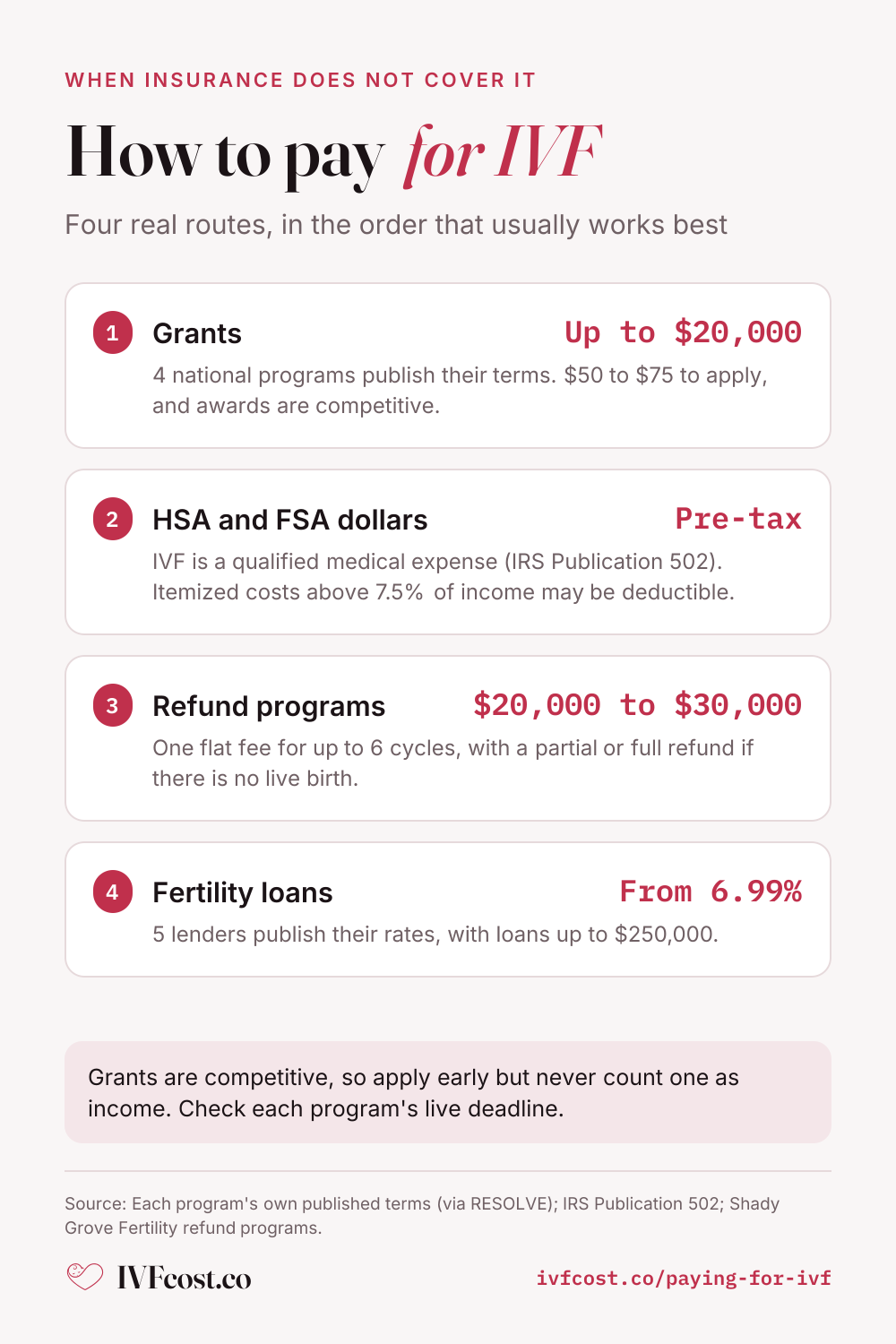
How to pay for IVF
When insurance does not cover IVF, four routes remain, and they usually work best in this order: national grants (4 programs publish their terms, with awards up to $20,000 and a $50 to $75 fee to apply), pre-tax HSA and FSA dollars (IVF is a qualified medical expense under IRS Publication 502, and itemized medical costs above 7.5% of adjusted gross income may be deductible), a refund program (one flat $20,000 to $30,000 for up to 6 cycles, with a partial or full refund if there is no live birth), and a fertility loan (5 lenders publish terms, with rates from 6.99%). Grants are competitive, so never count one as income.
Sources: RESOLVE: financing programs for fertility treatment; IRS Publication 502; Shady Grove Fertility refund programs
Grants, refund programs, loans and pre-tax dollarsThe process and timeline
Every step of a cycle and how long it takes, from the first injection to the due date.
The IVF process, step by step
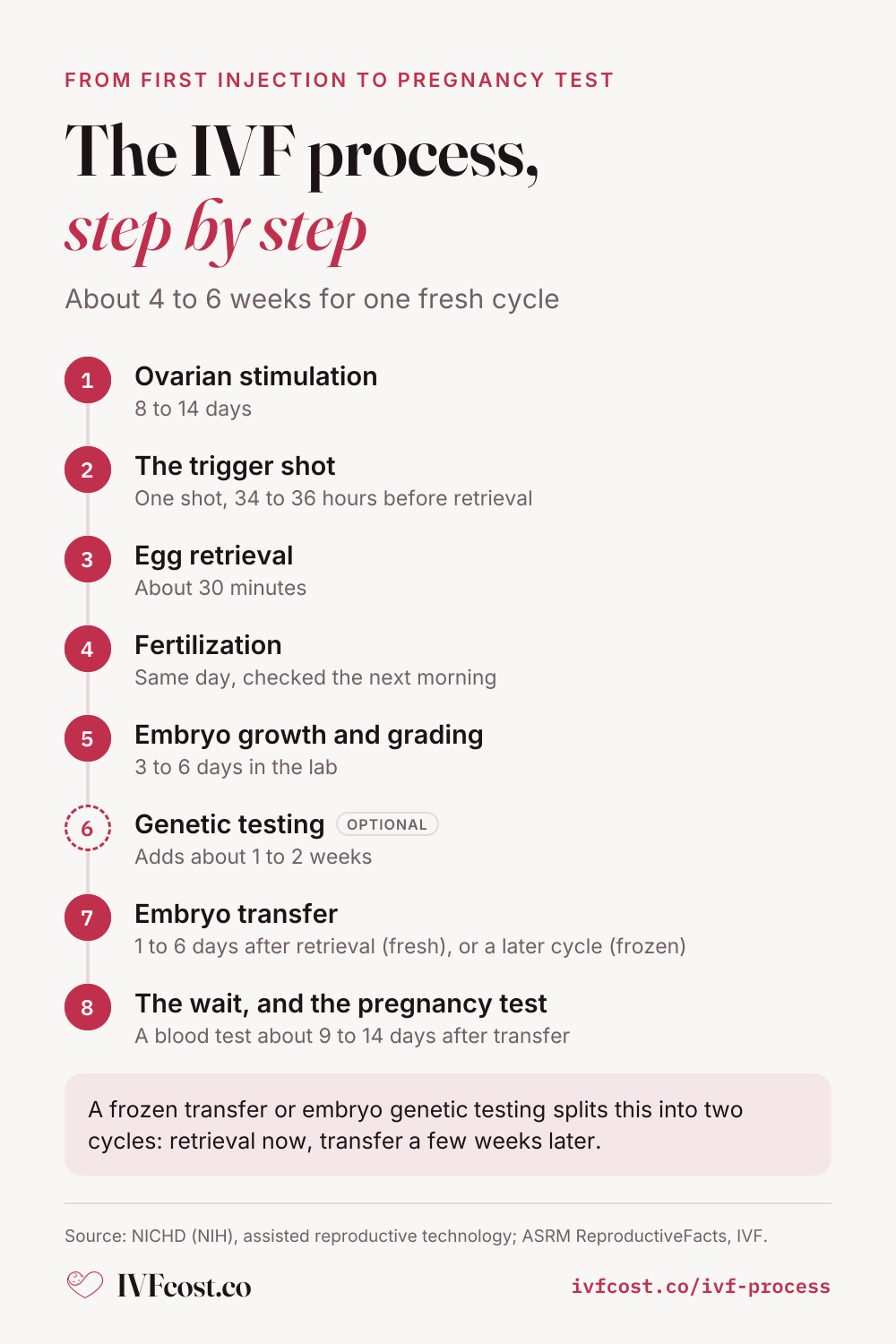
One fresh IVF cycle takes about 4 to 6 weeks from the first injection to the pregnancy test: ovarian stimulation, the trigger shot, egg retrieval, fertilization, embryo growth and grading, embryo transfer, the wait, and the pregnancy test. Genetic testing is optional and adds about 1 to 2 weeks, and a frozen transfer moves the transfer to a later cycle.
Sources: NICHD (NIH), What is Assisted Reproductive Technology?; ASRM ReproductiveFacts, In Vitro Fertilization (IVF)
Every IVF step, explained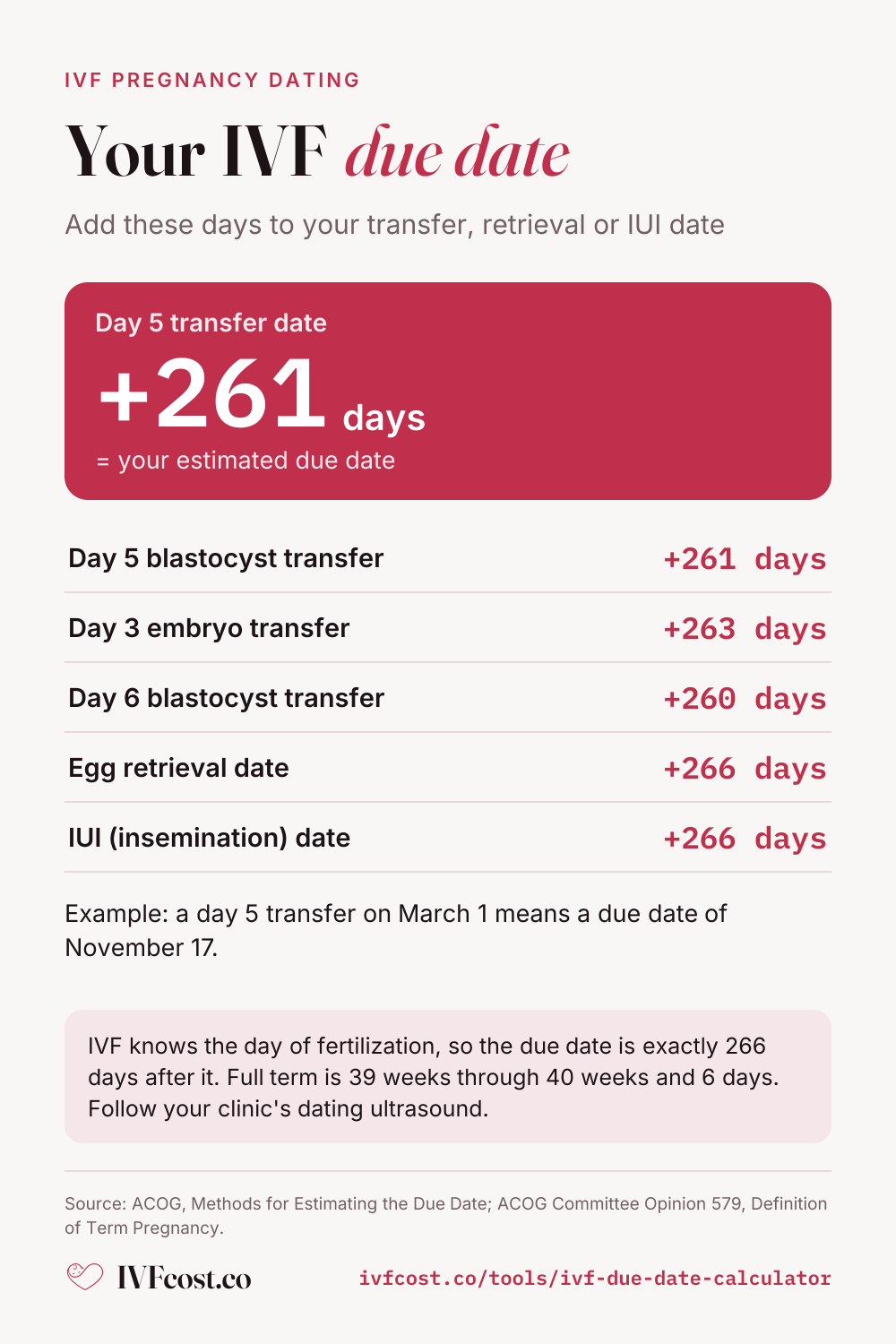
Your IVF due date
IVF dates a pregnancy from the known day of fertilization: a due date is 266 days after fertilization, so it is the transfer date plus 266 days minus the embryo's age: 261 days after a day 5 blastocyst transfer, 263 days after a day 3 embryo transfer, 260 days after a day 6 blastocyst transfer, 266 days after the egg retrieval date, 266 days after an IUI date. A day 5 transfer on March 1 gives a due date of November 17.
Sources: ACOG: Methods for Estimating the Due Date; ACOG Committee Opinion #579: Definition of Term Pregnancy
IVF due date calculator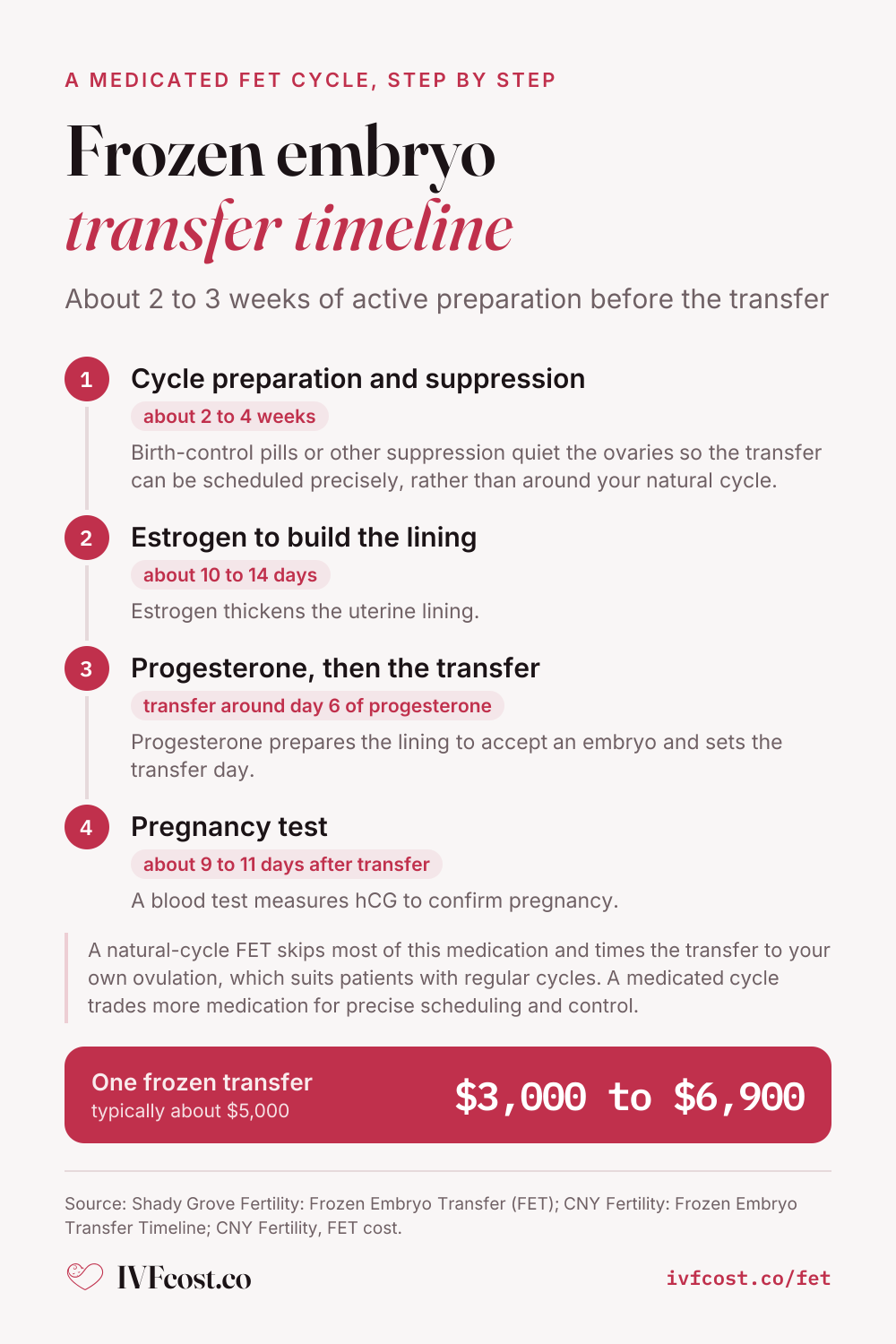
Frozen embryo transfer (FET) timeline
A medicated frozen embryo transfer (FET) takes about 2 to 3 weeks of active preparation: cycle preparation and suppression (about 2 to 4 weeks), estrogen to build the lining (about 10 to 14 days), progesterone, then the transfer (transfer around day 6 of progesterone) and pregnancy test (about 9 to 11 days after transfer). One FET typically costs about $3,000 to $6,900. A natural-cycle FET skips most of this medication and times the transfer to your own ovulation, which suits patients with regular cycles. A medicated cycle trades more medication for precise scheduling and control.
Sources: Shady Grove Fertility: Frozen Embryo Transfer (FET); CNY Fertility: Frozen Embryo Transfer Timeline; CNY Fertility, frozen embryo transfer cost
FET cost, success and timelineUsing these charts
Every chart is free to share, print, pin or embed under CC BY 4.0. Credit IVFcost.co with a link to the page the chart comes from; the embed code includes that credit for you. The charts are drawn from live data, so each one updates when its source does: a new CDC national release, a re-verified price, or another clinic reached by our price check.
New charts are added as the site grows. Follow them by RSS: IVF Success Rates, IVF Costs and Budgeting, IVF Process and Timeline, or every chart.
These are population figures for planning and comparison, not medical advice. For your own situation, talk with your clinician, and read the full context on each chart's source page.